Protective gear checklist for forestry operations

The dense hush of a forest can feel peaceful—until you remember what’s at stake after one misstep or malfunctioning saw. Forestry work is among the most dangerous jobs out there, with risks ranging from flying branches to deafening equipment and unpredictable terrain.
Yet every year, too many accidents happen simply because someone wore the wrong gear—or worse, skipped it altogether. Whether you’re a seasoned logger, a weekend woodlot owner, or just starting out, knowing exactly what protective equipment you need isn’t always clear-cut.
What does head-to-toe safety look like in the forest, and how do you choose gear that actually works in your environment? Stick with this guide and you’ll discover a no-nonsense checklist, practical tips, and little-known advice to keep you—and your crew—safer on every shift.
Importance of personal protective equipment (ppe) in forestry
Forestry work stands out as one of the most hazardous professions worldwide due to the combination of heavy equipment, sharp tools, unpredictable terrain, and the persistent risk of falling trees and limbs. Workers face constant exposure to dangers such as chainsaw cuts, head injuries from falling branches, hearing loss from loud machinery, respiratory hazards from dust and fuel fumes, and slips on uneven ground.
Real-world incidents highlight the severity: recent industry statistics reveal that forestry workers are about 30 times more likely to suffer a fatal injury than the average worker in other sectors. A widely cited example involves a crew member who, while not wearing the required safety boots and helmet, endured permanent disability from a falling tree—an outcome that the right protective gear could likely have prevented.
Personal protective equipment such as safety glasses, helmets, cut-resistant gloves, high-visibility vests, and chainsaw chaps directly reduces the risk of life-changing injuries. The difference is stark: the majority of severe chainsaw injuries occur among those who either neglect PPE or use noncompliant gear, whereas comprehensive adherence to PPE guidelines is linked to dramatically lower accident rates.
It’s crucial to recognize the gap between casual hobbyists and forestry professionals in both risk and safety responsibilities. Professionals are often required by osha and other governing bodies to meet precise safety standards, while hobbyists may be less regulated but still face significant risk and should follow best practices to protect themselves.
A strong safety culture on a forestry worksite doesn’t just mean following rules; it involves supervisors and crew members actively prioritizing each other’s well-being through regular job hazard assessments, safety training, equipment inspections, and a shared commitment to following established protocols. By embedding safety at every level—encouraging use of appropriate workwear, verifying respirator fit testing, and observing high cut protection classes—forestry organizations foster environments where near-misses are reported, hazards are swiftly controlled, and long-term occupational safety is truly achievable.
Overview of essential forestry safety gear: the complete checklist
Choosing the right forestry safety gear is a crucial safety measure for anyone working in logging, brush clearing, or timber operations. Every worker should be outfitted with a full set of personal protective equipment that complies with both legal requirements and the realities of the worksite.
So, what gear is essential for forestry safety?
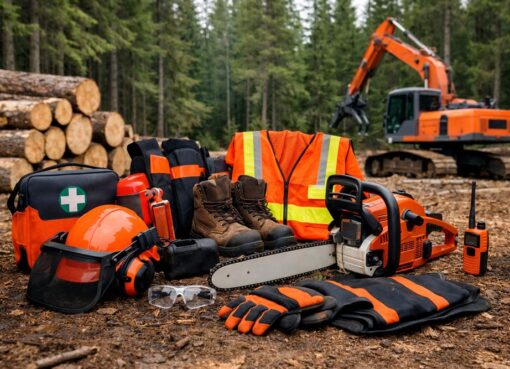
- Head protection: A certified helmet (hard hat) meeting ansi or en standards to guard against falling limbs and impacts.
- Eye protection: Safety glasses, goggles, or a mesh visor to protect from flying debris, with tinted safety glasses often needed for bright conditions.
- Hearing protection: Ear muffs or ear plugs to prevent hearing damage from chainsaws and heavy equipment.
- Respiratory protection: Dust mask or appropriate respirator for filtering fine particles, especially in dry or smoky conditions.
- Hand protection: Safety gloves with cut protection, such as kevlar chainsaw gloves or reinforced leather, are vital.
- Body and leg protection: High-visibility vests and jackets, along with chainsaw chaps or cut-proof trousers rated to the relevant din standards for chain speed and saw type.
- Foot protection: Safety boots with steel toe caps, puncture-resistant soles, and, in some cases, metatarsal guards.
For specialty tasks, consider these additions:
- Chainsawing: Kevlar chainsaw chaps, goggles or mesh face shield, and anti-vibration gloves.
- Brush clearing: UV-protective clothing, brush hooks, and thick pvc gloves.
- Night operations: Reflective logging vests, helmet-mounted lights, and visibility clothing in compliance with applicable standards.
- Steep or remote areas: Emergency action plan tools, personal gas monitors, and communication devices like radios or gps trackers.
These items must meet relevant certifications: For the United States, osha compliant workwear and astm f2413-standard safety footwear are required, while Europe refers to en and din standards. Always check the manufacturer’s chart and user manual for exact requirements, intended uses, and fit guidance.
For those seeking a quick-reference guide, be sure to download our printable PPE checklist, which offers a detailed, task-based review of mandatory forestry ppe items and features for different roles. Employers and employees alike should consult this checklist regularly as they prepare for daily operations, ensuring optimum protection thanks to quality safety gear and up-to-date industry standards.

Understanding forestry risks and ppe selection
Forestry workers face a range of workplace hazards that depend on the environment, the tools in use, and the nature of the tasks at hand. Chainsaw injuries, for example, are a top concern—chainsaws can cause severe cuts, so items like kevlar chainsaw chaps and protective gloves with high cut protection classes are essential PPE components for anyone operating machinery.
Noise is another critical risk in forestry operations, especially when using heavy equipment or power tools. Prolonged exposure to loud equipment can lead to hearing loss, making ear protection gear such as earmuffs or ear muffs a must-have for personal protective equipment.
Environmental hazards also play a major role in PPE selection. During extreme cold, insulated safety boots and waterproof protective clothing help maintain safety and comfort, while hot conditions call for breathable workwear and face shields with effective ventilation to avoid heat stress.
Steep slopes or dense forest areas increase the risk of slips and falls. High-traction safety boots and harnesses may be needed for optimum protection thanks to their ergonomics and robust grip.
For those performing tasks alone or working at night, additional risks arise. A personal gas monitor, high visibility vests, and reliable communication gear are examples of protective equipment that enhance worker safety in these scenarios.
PPE effectiveness is well documented—case studies from the forestry industry show that the introduction of chain-resistant chaps cut chainsaw-related injuries in half over a five-year period. Similarly, routine use of safety glasses and safety sunglasses reduced eye exposure incidents by over 60% according to recent reports.
Common mistakes in PPE selection can undermine safety. Choosing the wrong cut protection items for a specific tool, failing to perform respirator fit testing, or overlooking seasonal needs can leave workers exposed to unnecessary occupational hazards. Always match PPE to both the job and the work environment—consulting a comprehensive checklist or guide is a crucial safety measure to ensure coverage for all potential hazards.
Key requirements and factors for choosing forestry ppe
Selecting the right forestry personal protective equipment involves more than just picking items off a shelf—it centers on compliance with legal requirements and safety standards. Strict regulations from OSHA, ansi, and various european standards detail the minimum requirements for protective gear, and employers are legally responsible for ensuring their team has appropriate, certified PPE.
Sizing and fit matter for both comfort and effectiveness; ill-fitting safety boots or a helmet that slips can quickly fail during an incident. Many manufacturers provide sizing charts and standard specification guides to help workers or supervisors choose equipment with ergonomic design and maximum protection.
Materials and certification marks offer deeper insight into product quality and suitability. For instance, chainsaw chaps should clearly indicate their cut protection class and any relevant din standards or american national standard certifications. Comparing brands on these specifics, as well as independent performance test results, helps ensure that the equipment ppe meets the demands of daily forestry work.
Forestry roles can differ greatly—machine operators, ground crew, and supervisors each have unique risks and responsibilities. A project leader may require high visibility clothing, communication gear, and cut-resistant gloves, while an operator running a brush hook needs additional hand protection and face shield coverage. Tailoring gear choices to specific duties maximizes both safety and efficiency.
For budget-conscious employers and workers, cost-effective PPE solutions are still possible. Invest in quality safety gear that meets longevity expectations, look for bulk purchase discounts from reputable brands, and periodically compare new products to take advantage of innovations without overspending. Remember, saving on PPE costs by lowering safety standards can lead to expensive consequences from workplace accidents or non-compliance penalties.
Specialized and additional protective equipment
Forestry environments present hazards that go beyond standard head, hand, and eye protection, so having the right specialized protective equipment can make a significant difference in both safety and efficiency. Face shields and mesh visors offer crucial eye and face protection from wood chips and flying debris—essential during chainsaw use or when brush cutting. Workers often combine these with safety glasses or goggles for enhanced safety against both impact and dust exposure.
High-visibility vests and cut-resistant clothing are especially critical in low-light conditions, dense brush, or during night operations. Hi-vis gear—such as logging vests and brightly colored helmets—ensures you remain visible to coworkers and machinery operators, while cut-resistant fabrics (meeting DIN or EN standards) provide robust protection from chainsaw injuries and sharp tool mishaps.
When it comes to emergency preparedness, items like first-aid kits, trauma kits, and signaling whistles are non-negotiable. GPS trackers and two-way communication devices are vital, particularly for lone workers or those operating in expansive forestry areas where quick location in emergencies can save lives.
For added comfort and protection during long operations, accessories such as hydration packs, anti-vibration gloves, and breathable workwear reduce fatigue and help maintain focus. Hydration packs are particularly useful for maintaining worker safety in hot weather or remote sites with limited access to clean water.
Your choice of extras may depend on your role and experience. For instance, forestry professionals often opt for full-featured communication headsets, trauma packs, and advanced GPS units, whereas hobbyists or casual users benefit most from adding hi-vis vests, a basic first-aid kit, and a whistle to their standard kit. Selecting the right tool or device according to your operational environment helps ensure complete protection against hazards beyond the usual.

Proper use and maintenance of forestry protective gear
Wearing protective equipment correctly is equally as important as selecting the right gear—improper use can undermine even the highest-quality safety products. Follow a consistent step-by-step process for donning (putting on) and doffing (removing) PPE: for example, begin with base layers like safety chaps and boots, then add cut-resistant gloves, safety glasses or goggles, helmet with face shield, and finally high-visibility clothing. Refer to the manufacturer’s user manual for any item-specific instructions, especially for complex gear such as respirators or harnesses.
Regular inspections should be part of your routine. Always use a gear checklist before starting work: check helmet shells for cracks, ensure visor hinges operate smoothly, and inspect safety boots for worn treads or damaged toe caps. For eye protection, confirm that lenses are scratch-free and fit snugly. If you use gas monitoring equipment or personal gas monitors, test alarm functions and battery levels.
Proper cleaning and storage lengthen the service life of your PPE and reduce the risk of contamination. Wash garments in accordance with the manufacturer’s care instructions, avoiding harsh chemicals that may degrade performance fabrics or decrease cut resistance. Respirators and face shields need routine decontamination, especially after exposure to forestry dust or chemicals—always allow equipment to air dry completely before storage in a clean, dry area protected from direct sunlight or extreme temperatures.
Common maintenance mistakes include failing to dry gear thoroughly, reusing disposable filters, or storing helmets in areas with chemical fumes. These missteps increase the likelihood of equipment failure or diminished protection. For detailed care routines and troubleshooting, refer to dedicated maintenance and care guides offered by suppliers and manufacturers or on your organization’s safety website.
Consistent, correct use and attentive maintenance aren’t just regulatory requirements—they directly contribute to occupational safety, reduce downtime from workplace accidents, and extend the lifespan of essential safety gear.