Efficient methods for clearing overgrown woodland

Have you ever stared at a wild, tangled patch of woodland and wondered where to even begin clearing it? Whether you’re dreaming of new trails, reclaiming forgotten acreage, or just taming an unruly thicket, tackling overgrown woodland can feel like an overwhelming puzzle. There are decisions about what to keep, which tools to use, how to stay safe, and what’s legally required—all before you even think about the piles of brush and stubborn stumps left behind. But with a clear plan, the right equipment, and a bit of know-how, you can transform even the densest woodlot into a manageable, thriving space—while respecting wildlife and the environment. Stick around, and you’ll learn every practical step, safety tip, and insider secret you need to confidently clear overgrown woodland, from that first assessment to long-term restoration.
How to clear overgrown woodland: step-by-step guide
Clearing overgrown woodland involves much more than simply cutting down trees or mowing through dense brush. The process begins with a careful assessment of your property’s current site conditions. You’ll want to walk the boundaries, marking out property lines and noting any unique features—such as natural pond areas, steep slopes, or existing trails. Knowing exactly where your land begins and ends helps avoid disputes with neighbors or accidental encroachment into conservation areas.
Once the boundaries are mapped, determine your primary land use and set specific goals. Ask yourself if you want to create open space for a garden, manage a firewood woodlot, pasture animals, or simply clear trails for access. A clear purpose shapes how you approach land clearing, the types of clearing equipment you may need, and the end result you hope to achieve. For example, clearing trails through overgrown fields for personal use requires a much lighter touch than preparing large areas of acreage for building projects.
Next, evaluate the types and densities of vegetation present. Look for a mix of brush, saplings, dense underbrush, large trees, or invasive species like cottonwoods or honeysuckle. Identifying dense patches versus open areas is crucial because it impacts your choice of land clearing methods and tools, such as brush mowers for rough terrain or chainsaws and stump grinders for mature woodland. At this point, some property owners choose to engage with local forestry commission officers or conservation agencies for additional insight into managing valuable resources or sensitive habitats.
Developing a woodland clearing plan tailored to your lot size is essential. For a small woodlot or yard edging up to an acre, you may be able to handle most tasks using hand tools and a rented brush cutter. Larger acreages, wooded areas, or overgrown woodland may require heavy-duty tractors, mulchers, or even land clearing contractors, especially for persistent stumps or felled trees. Good planning includes laying out meandering paths, access roads, and deciding what brush or logs will be kept for firewood or useable logs.
Consider this real-world scenario: a property owner with five overgrown acres needed to open up trails, maintain privacy, and restore a natural pond. Their step-by-step approach began by mapping trails on paper, then cutting small trees and brush with a brush mower, and finally using a rented stump grinder to tackle annoying stumps along the path. In contrast, a family with a half-acre garden only needed loppers, a string trimmer, and steady weekends of work to turn dense underbrush into a clear, useable yard.
No matter the acreage, having a solid woodland management plan—and adjusting it as the project evolves—sets you up for better results and easier land maintenance down the line.

Essential tools and equipment for woodland clearing
Choosing the right tools and land clearing equipment can make any clearance project more efficient and less backbreaking. Manual tools are best suited for smaller lots, lighter brush, or where precision trimming around select trees or fencing is required. Common hand tools include saws, loppers, axes, and pruners—ideal for cutting small tree branches, saplings, and clearing trails in tight, wooded areas. For very dense patches or tough weeds, a durable brush cutter or string trimmer with a beaver blade attachment can tackle stubborn spots without overcomplicating the job.
When facing larger areas or heavy growth, mechanical equipment is the smarter investment. A chainsaw is often the most effective tool for felling trees and cutting through thick timber. Brush mowers, sometimes called brush hogs, attach to sized tractors and make quick work of fields, overgrown brush, and young saplings. For deeply rooted stumps or extensive root systems, stump grinders or mulchers—available as standalone machines or tractor attachments—provide a thorough clearing. If you need to move debris, a small trailer or log arch can help haul logs, while a wood chipper turns branches and brush into mulch, reducing disposal loads and creating valuable material for gardens or wooded trails.
Most property owners wonder whether to rent or purchase these tools. For single-use land clearing projects or average homeowners with smaller acreage, renting equipment like a stump grinder, mulcher, or compact tractor from your local equipment rental yard often offers the best balance of cost and convenience. Larger, ongoing jobs or individuals managing woodland mills or multiple acres may benefit from purchasing key equipment—especially durable chainsaws, brush cutters, or a utility tractor with several attachments.
Regular maintenance is crucial to get the most from your investment and avoid equipment breakdowns mid-project. Keep cutting tools clean and sharp, check oil and fuel levels in all gas-powered machines, and inspect moving parts for wear after each use. Don’t forget to consult tool guides or manufacturer recommendations, or engage with local tool service providers for complex repairs or annual maintenance.
For those new to woodland clearing, many hardware stores, woodland equipment dealers, and forestry commission sites offer helpful guides to match the right tools to your land clearing methods, as well as directories for trusted service providers. Getting the right equipment not only saves time and energy, it also ensures your clearing project is completed safely and to a high standard.
Safety precautions and navigating legal or permit requirements
Before starting any land clearing project, it’s crucial to identify all potential hazards that could put you or your team at risk. Unstable trees, hidden debris like old fencing or rocks, and unexpected encounters with wildlife such as snakes or wasps can quickly turn a routine clearing job into a dangerous situation.
Conduct a thorough walkthrough of the property to spot trouble areas, paying close attention to dense overgrown brush where fallen logs or animal nests may be hidden. Consider marking or flagging any hazardous zones so everyone on site stays informed.
Wearing the proper personal protective equipment (PPE) dramatically reduces the risk of injury during land clearing. At a minimum, use safety goggles, hard hats, hearing protection, gloves, steel-toed boots, and high-visibility clothing. If you’re operating mechanical land clearing equipment such as chainsaws, stump grinders, or brush cutters, additional gear—like face shields and chainsaw chaps—should be standard.
Make sure everyone understands safe work practices, including proper lifting techniques, equipment lockout procedures, and safe distances from heavy machinery or falling timber. Don’t overlook the importance of first aid kits on site, and always have a way to call for help in case of emergency.
Legal and permit requirements can vary widely depending on your location, the acreage involved, and the types of vegetation or wildlife present. Many counties and municipalities require land owners to obtain permits before cutting large trees, clearing brush, or removing stumps—especially if protected species or sensitive forests are involved.
Failure to get the right permits can result in hefty fines or forced restoration. Consult your local forestry commission, conservation agency, or permitting office to clarify which laws apply to your project. Keep documentation on hand during clearing, including property maps, permits, and any communication with regulatory authorities.
Land clearing projects come with legal liabilities, particularly when it comes to accidental property damage or injuries on site. Property owners should check that their insurance covers land clearing jobs and that contractors carry their own liability coverage if hired. Coordinating with forestry authorities can not only keep your project compliant but can also offer valuable guidance for safer, more efficient clearing practices.
Best practices for clearing vegetation and stump removal
Clearing overgrown land often means dealing with everything from tangled brush to mature trees and annoying stumps. Effective land management starts with picking the right clearing methods for each type of vegetation, size of area, and end goal for your property.
Brush and saplings can usually be tackled with hand tools for smaller areas—loppers, axes, and brush cutters are ideal for invasive shrubs and woody weeds. For larger acreage or dense overgrowth, mechanical equipment such as brush mowers or heavy-duty string trimmers greatly increase efficiency. If you’re managing overgrown fields with thick grass and brambles, consider a walk-behind brush mower or a tractor-mounted mulcher.
Removing stumps is one of the toughest parts of clearing land, but there are different ways to handle them depending on size and available equipment. Manual removal works best for smaller stumps—use a shovel, mattock, and a sturdy pry bar to cut exposed roots and lever out the root ball. For mid-sized stumps, applying chemical stump removers can accelerate decomposition, though this is a slow process that may take several months.
Stump grinders are a powerful tool for eliminating large or numerous stumps quickly—renting a grinder makes sense for major land clearing projects or when tackling especially tough roots. Just remember to read the safety instructions, wear PPE like safety goggles and gloves, and keep bystanders away from flying wood chips.
To affordably and efficiently clear brush and debris, many landowners turn to mulching. A wood chipper reduces branches, saplings, and scrap wood into valuable mulch for garden paths or erosion control. If buying isn’t practical, equipment rental yards often offer brush mowers, stump grinders, and wood chippers at daily or weekly rates. This lets you tackle your brush clearing and stump removal without a huge upfront investment.
Minimizing soil and tree damage is essential, especially in sensitive woodland or when maintaining a healthy forest floor. Avoid dragging stumps or logs across dirt, since this can strip topsoil and cause erosion. Cut vegetation as close to the ground as possible, and use portable sawmills or log arches to safely move larger pieces of timber.
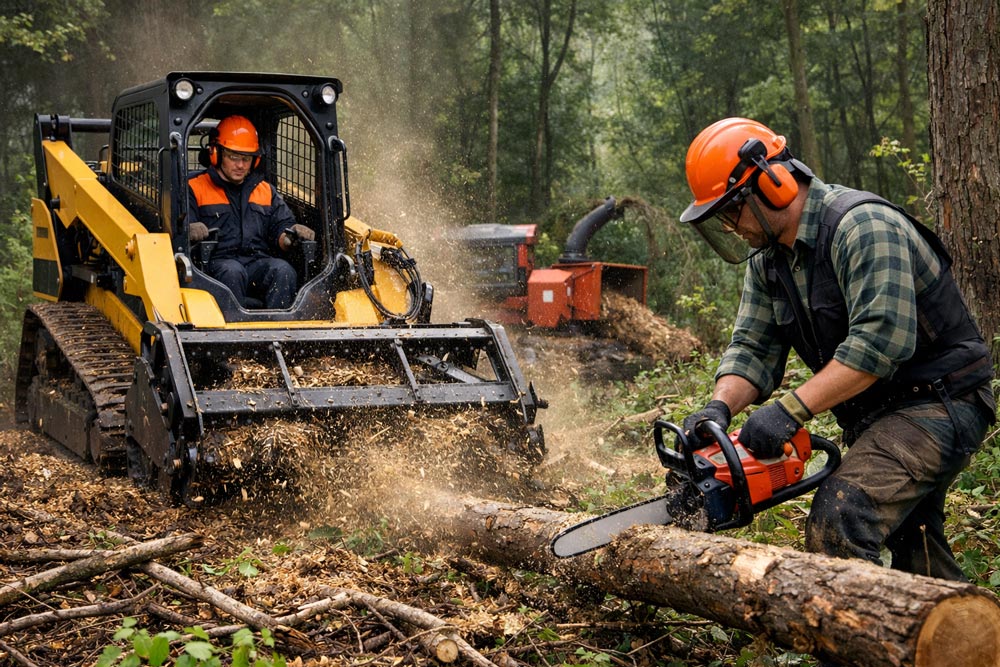
For example, on a recent five-acre woodland clearing, the owner used a combination of a heavy-duty brush mower on open areas and a chainsaw plus manual stump grinder for more challenging wooded spots. Photos from the job clearly show how strategic removal preserved native trees and minimized bare earth exposed, helping the new clearing blend into existing woodland. Following these steps turns the intimidating task of clearing land or removing stumps into a manageable project—reducing effort, cost, and environmental impact.
Addressing environmental and wildlife considerations
Clearing overgrown land isn’t just about removing brush and trees—you also need to consider the impact on local wildlife and the forest ecosystem. Before starting any clearing, it’s important to identify sensitive habitats like wetlands, nesting areas, or zones where species at risk might live.
Critical habitats often aren’t obvious at first glance. For instance, a pile of brush might house birds or small mammals, and certain sections of woodland may support rare plants. You should walk your acreage with a local conservation agency, a forestry commission representative, or a qualified conservation expert to pinpoint these sites. They can also guide you on following environmental regulations and permits that might affect your project.
Soil erosion is a major concern when removing large amounts of vegetation. Tree roots help stabilize dirt, especially on sloped land, so strategize to clear land in sections and leave some root systems undisturbed where possible. Mulching cleared vegetation onsite with a wood chipper or mulcher can help protect exposed soil and return nutrients, acting as a quick buffer against rain and wind.
Projects scheduled during bird nesting or breeding seasons can disrupt populations or even violate wildlife regulations. Aim to clear brush and remove trees either before or after local nesting periods—usually before spring or after summer, depending on your region. Most local wildlife departments can offer specific guidance for your woodlot or acreage.
Working with conservation consultants or a forestry authority before, during, and after the land clearing project ensures you stay compliant with environmental protection laws and minimize negative impacts. There are also online resources from organizations like your state’s forestry department or the U.S. Fish & Wildlife Service for property owners managing wooded areas.
Ultimately, environmentally responsible land clearing protects not just your property, but local wildlife and natural resources—benefiting both you and your community in the long run.


